
Published · Updated
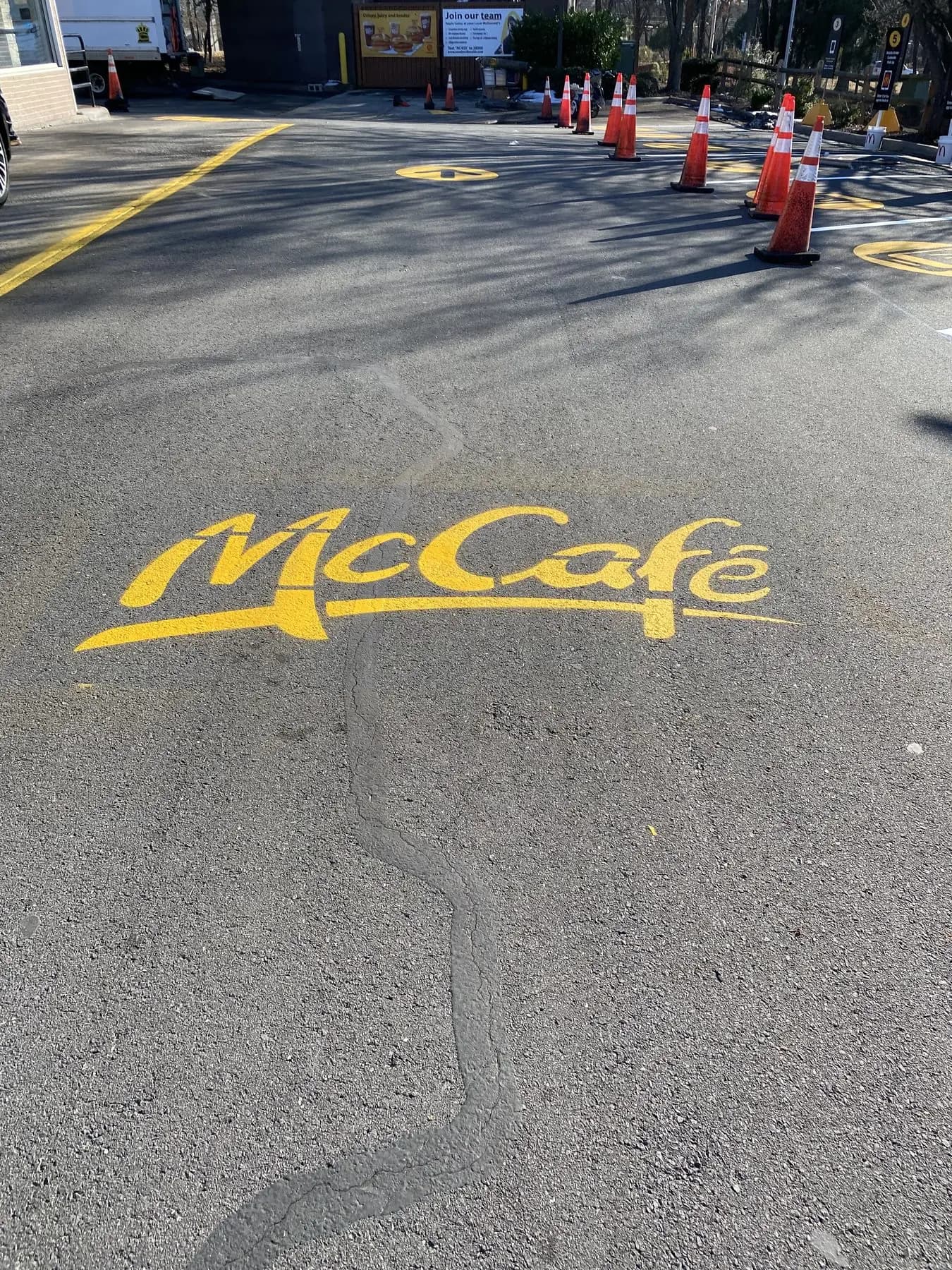
For quick service restaurants (QSRs), the exterior of your establishment is more than just a convenience; it’s a critical component of your business. From the moment a customer pulls into your parking lot to the quick transaction at your drive-through, the condition of your pavement dictates first impressions, safety, and operational efficiency. Neglecting your asphalt paving and maintenance can lead to lost business, safety hazards, and costly repairs down the line.
The Critical Role of Pavement for Quick Service Restaurants
A QSR’s pavement decides three things: the first impression a customer forms pulling in, whether the lot is safe and accessible to cross on foot, and how fast vehicles clear the drive-through. Think of your parking lot and drive-through as the welcome mat and primary thoroughfare for your QSR.
First Impressions & Curb Appeal
A smooth, well-maintained parking lot signals professionalism and attention to detail. Conversely, cracks, potholes, and faded lines detract from your brand image and create a negative first impression, impacting your restaurant’s overall curb appeal.
Customer Safety
Cracks, potholes, and uneven surfaces are major tripping hazards for pedestrians and can damage vehicles. Proactive restaurant parking lot maintenance helps prevent accidents and reduces potential liability for your business. Adhering to ADA compliance parking lot standards ensures safe and accessible pathways for all guests.
Operational Efficiency & Traffic Flow
A smooth, clearly marked lot facilitates seamless vehicle movement. A well-maintained drive-through minimizes wait times and keeps service efficient, directly contributing to customer satisfaction and repeat business. QSR parking lots and drive-throughs experience constant, heavy traffic throughout the day, often more intense and repetitive than other businesses. This continuous stress leads to accelerated wear and tear.
Minimizing Disruption: Strategies for QSR Pavement Projects
QSRs cannot afford extended closures, so Crown Paving builds the schedule around your operating hours rather than around ours.
Minimizing Impact
Four levers keep a restaurant trading through the work: night shifts, phased sections, off-peak scheduling and temporary traffic control.
- Nighttime Asphalt Work: Crown Paving executes nighttime asphalt work, completing projects during non-operating hours to ensure your business is ready for customers the next morning.
- Phased Projects: For larger jobs, Crown Paving will section off portions of your parking lot or drive-through, working on one area at a time while keeping other sections open. This allows continuous access to your restaurant.
- Off-Peak Scheduling: Crown Paving will work with you to schedule projects during your slowest hours or days to significantly reduce customer inconvenience.
- Temporary Traffic Solutions: Crown Paving will implement temporary signage, cones or barricades, and extra flaggers to maintain safe traffic flow during repairs.
Choosing the Right Material for QSRs
For QSRs a hybrid usually wins: asphalt across the main parking areas and durable concrete in heavy-wear zones like the drive-through. The decision between the two depends on the specific area and your budget.
Asphalt vs. Concrete
Asphalt runs $3-$7 per square foot and lasts 15 to 25 years with maintenance; concrete runs $7-$15 and lasts 25 to 50, which is why it earns the drive-through rather than the whole lot.
- Asphalt: Generally more affordable upfront ($3-$7 per square foot for commercial lots), quicker to install, and flexible, which helps it resist cracking from temperature changes. It’s ideal for large parking lot areas.
- Concrete: More expensive to install ($7-$15 per square foot) but offers superior durability and resistance to oil and grease, making it excellent for high-stress areas like drive-through lanes, entrances, and dumpster pads. While asphalt may last 15-25 years with maintenance, concrete can last 25-50 years.